

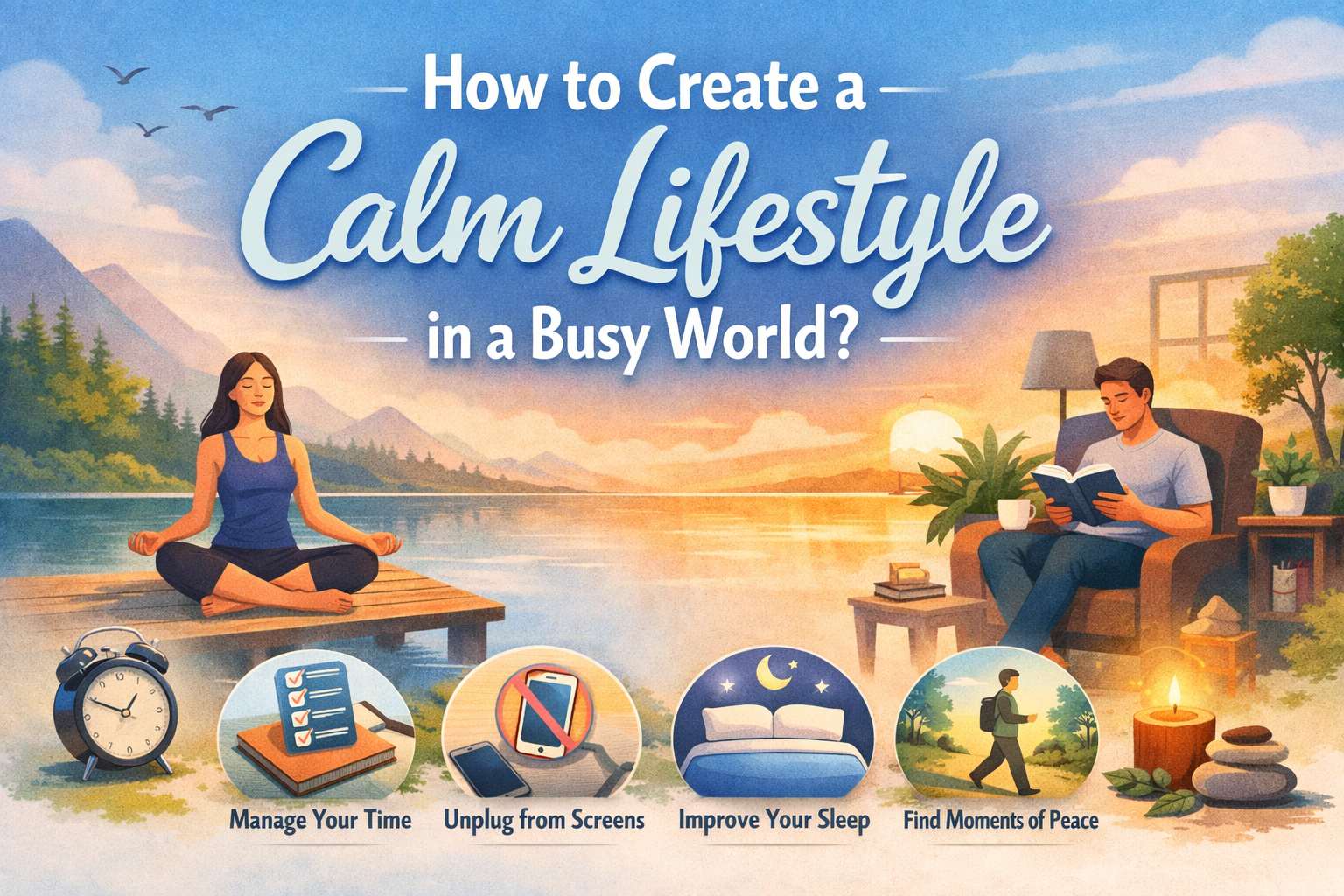
Life moves fast. Work, family, screens, and noise fill our days. Many people feel tired before the day ends. A calm lifestyle is not about quitting work or moving away. It is about simple choices that bring peace into daily life. This guide shares clear and practical ways to build calm, even when life stays busy.
Understanding Calm in Daily Life
Calm does not mean silence all the time. Calm means feeling steady inside. It means your mind feels clear, and your body feels at ease. You can still meet goals, finish tasks, and care for others. You just do it without constant stress.
A calm lifestyle starts with small steps. You do not need to change everything at once. One habit at a time is enough.
Why a Calm Lifestyle Matters
Stress affects sleep, focus, and health. It also affects how we speak and listen. When stress stays high, small problems feel big. Calm helps you think better and act with care.
Benefits of a Calm Lifestyle
- Better sleep quality
- Clear thinking
- Strong focus
- Better mood
- Healthier relationships
Calm helps you enjoy daily moments. It helps you feel present in your own life.
Identify What Makes Life Feel Busy
Before you create calm, you need to know what causes stress. Each person is different.
Common Sources of Stress
- Long work hours
- Too many tasks
- Phone and social media use
- Poor sleep
- Lack of breaks
Write down what drains your energy. This list will guide your next steps.
Create a Calm Morning Routine
Your day often follows how your morning starts. A rushed morning sets a rushed tone.
Simple Morning Habits
- Wake up at the same time
- Avoid phone use for the first 30 minutes
- Drink water
- Stretch for five minutes
- Sit in silence for a few minutes
You do not need a long routine. Even ten calm minutes can change your day.
Manage Your Time With Care
Busy days feel heavier when time feels out of control. Time planning brings calm.
Time Planning Tips
- Write three main tasks for the day
- Do one task at a time
- Keep space between tasks
- Set a clear end time for work
Avoid filling every hour. Empty space helps your mind rest.
Learn to Say No Without Guilt
Many people feel stressed because they say yes too often. Saying no protects your energy.
How to Say No
- Be clear and kind
- Keep your answer short
- Avoid long reasons
- Respect your limits
When you say no to one thing, you say yes to calm.
Reduce Digital Noise
Phones bring value, but they also bring noise. Alerts, messages, and feeds pull attention away.
Simple Digital Habits
- Turn off non-essential alerts
- Set phone-free hours
- Keep phone out of reach during work
- Avoid screens before sleep
Use technology as a tool, not a constant presence.
Create a Calm Living Space
Your surroundings affect your mood. A calm space supports a calm mind.
Easy Ways to Calm Your Space
- Clear clutter from visible areas
- Use soft lighting
- Keep colors simple
- Add plants or natural items
You do not need a full makeover. One clean corner can bring peace.
Build Calm Through Daily Movement
Movement helps release tension from the body. It also improves focus.
Gentle Movement Options
- Walking
- Stretching
- Yoga
- Light exercise
Choose movement you enjoy. Consistency matters more than intensity.
Eat in a Calm Way
Food affects energy and mood. Eating with care supports calm.
Calm Eating Habits
- Eat without screens
- Take time to chew
- Keep meals simple
- Drink enough water
A calm meal gives your body a break from rush.
Practice Simple Breathing
Breathing affects how you feel in seconds. Calm breathing sends a signal of safety to the body.
Easy Breathing Practice
- Sit or stand still
- Breathe in through the nose
- Breathe out through the mouth
- Count four in, four out
- Repeat for two minutes
Use this practice during stress or before sleep.
Set Clear Work Boundaries
Work often follows us home. Boundaries help you rest.
Work Boundary Ideas
- Set fixed work hours
- Avoid checking work messages at night
- Create a work closing ritual
- Keep a separate work space
Rest is not a reward. It is a need.
Improve Sleep for a Calm Mind
Poor sleep increases stress. Good sleep restores balance.
Sleep Support Tips
- Sleep and wake at fixed times
- Keep the room dark and quiet
- Avoid screens before bed
- Create a calming night routine
Sleep is the base of a calm lifestyle.
Build Calm Relationships
People affect your energy. Healthy communication supports calm.
Relationship Habits That Help
- Listen without interrupting
- Speak clearly
- Avoid rushing conversations
- Spend time with supportive people
Calm grows in safe connections.
Accept What You Cannot Control
Not everything needs fixing. Acceptance reduces inner tension.
Focus On What You Can Control
- Your actions
- Your reactions
- Your habits
- Your choices
Let go of what drains energy without purpose.
Create a Simple Evening Routine
Evenings prepare you for rest. A calm night leads to a calm next day.
Evening Routine Ideas
- Lower lights
- Read a book
- Stretch lightly
- Reflect on one good thing
Keep evenings slow and gentle.
Make Calm a Daily Practice
Calm is not a one-time goal. It is a daily choice. Some days will feel busy. That is normal. Return to simple habits.
Small steps create lasting change.
FAQs
What is a calm lifestyle?
A calm lifestyle means living with balance, clear focus, and less stress through simple daily choices.
Can busy people live calmly?
Yes. Calm comes from habits, not free time.
How long does it take to feel calmer?
Many people feel a change within a few days of simple habits.
Do I need to meditate to feel calm?
No. Breathing, walking, and quiet moments also help.
What is the best first step?
Start with a calm morning or better sleep.